
Optimize
Optimize hands the workflow’s open values to an optimizer. Each trial, the optimizer suggests values, the workflow runs with them, and what it measured is reported back; after the budget is spent, the best trial is in Data History.
-
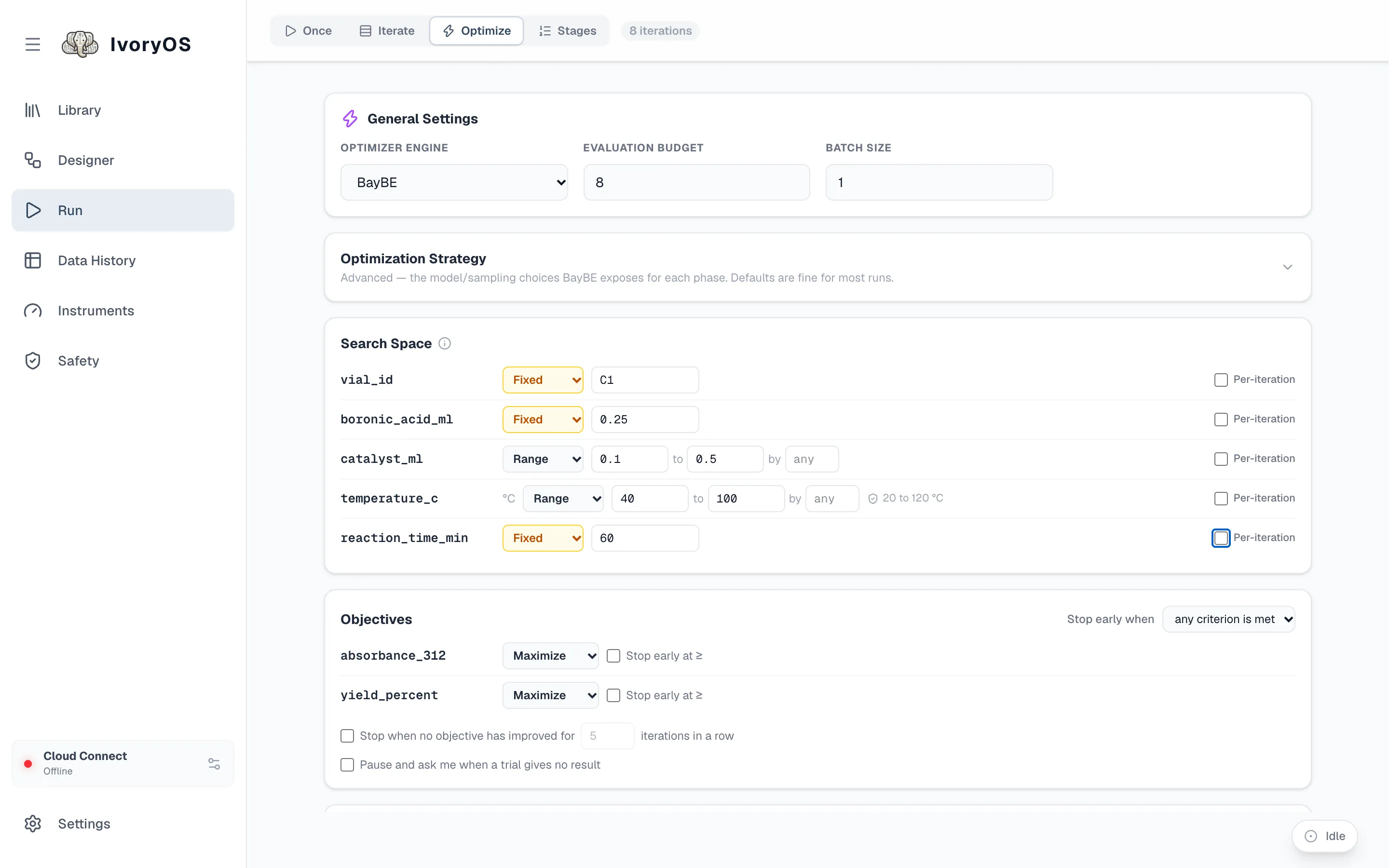
General settings. Pick the engine, the evaluation budget (the total number of trials) and the batch size (how many trials the optimizer suggests at once; every trial in a round runs, then the round is reported back together).
-
Search space. One row per open variable. Each is either Range (
mintomax, with an optional step, which makes a grid), Choice (a list of values), Substance (a SMILES per name; BayBE with its chemistry extra), or Fixed (one value for the whole run, which takes that variable out of the search). Per-iteration instead gives it a table of values, one per trial, for something that must differ by trial but is not searched: a vial position. -
Objectives. Every numeric output the workflow saves is listed; set each to Maximize or Minimize. Optionally stop early when an objective reaches a value, when no objective has improved for N trials in a row, and tick Pause and ask me when a trial gives no result to be asked rather than have such a trial left out.
-
Existing data (optional) warm-starts the optimizer with results it has not run itself: earlier runs from Data History whose search space and objectives match, or a CSV with those columns.
-
Optimization strategy (advanced) sets the random start and the model, and Constraints add relations the suggestions must satisfy (
catalyst_ml + ligand_ml <= 0.6), checked before the run is accepted. -
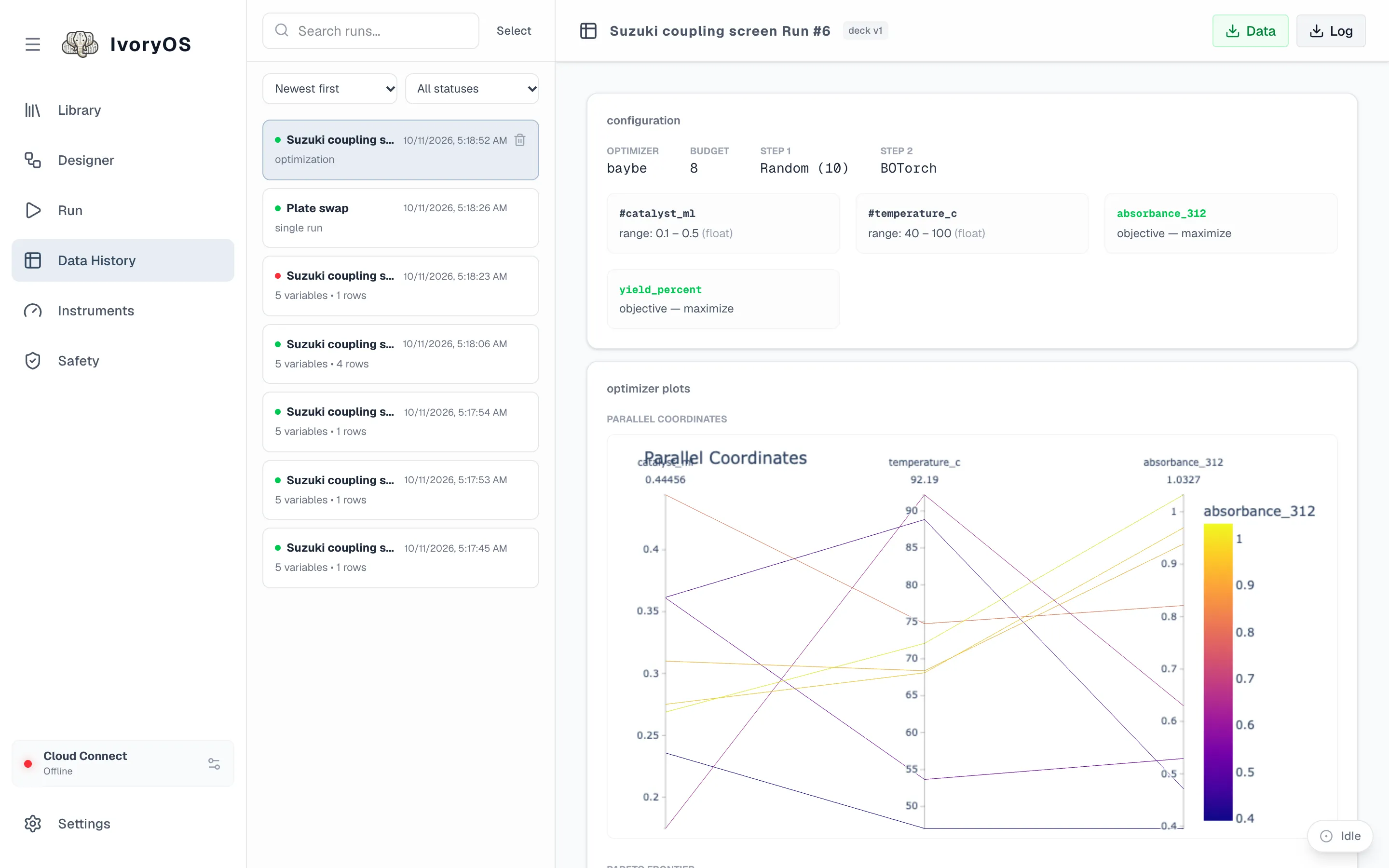
Start Optimization. The run bar reports trial 3 of 8; Data History shows the configuration, one row per trial with its suggested values and objectives, and the optimizer’s own plots for the most recent optimization since the deck started.
What the three backends do differently
Section titled “What the three backends do differently”They count the random start differently, treat a failed trial differently, and use existing data differently. How the optimizers behave has the table; the short version:
- A trial whose objective came back missing (the step was skipped, or returned nothing or NaN) is left out of the model and still counts towards the budget.
- The optimizer failing to suggest, or refusing a round’s results, pauses the run and waits for you, like a failed step.
- NIMO takes only lists (a range with a step, or a choice) and does not use existing data.
Suggestions without running
Section titled “Suggestions without running”Get suggestions without running the workflow opens a campaign: the optimizer suggests the next trials, you run them however you like (by hand, elsewhere) and type the results back in, and it suggests again. A campaign is rebuilt from its results on every request, so it survives a restart.